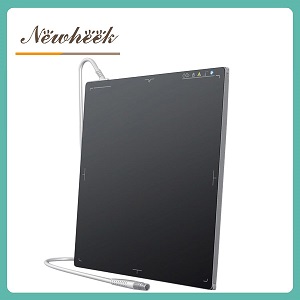
there is no single honest number. Publicly available sources quote detector lifespans anywhere from 3–5 years (common manufacturer warranty-style figures) to 7–10 years (industry reviews of modern panels), with heavy-duty continuous operation quoted as short as ~2 years in industrial channels — because lifespan is driven by accumulated dose, handling, environment and luck, not by a calendar. The useful question is not “how long will it last” but “how do I tell, early and cheaply, whether this panel should be repaired, refurbished or replaced?” This article lays out the published lifespan claims side by side, the failure-mode distribution behind them, a hands-on self-check list for an aging panel, and the simple cost rule service organizations use for the repair-or-replace decision.
Scope note: all lifespan and failure-rate figures in this article are third-party published estimates, cited with their sources, and vary by usage profile. We do not state a lifespan figure for our own panels in articles; ask us (or any supplier) in writing for warranty terms, expected service life under your workload, and the test data behind any claim.
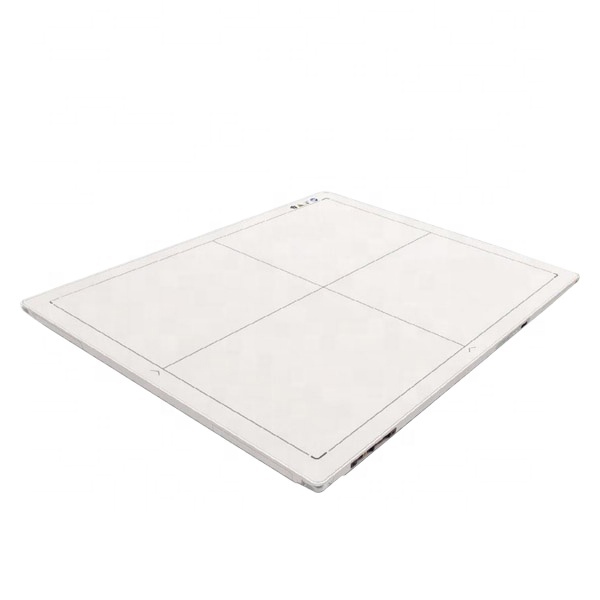
Search long enough and you will find three different answers to “how many years does a flat panel detector last.” They are not necessarily contradictory — they measure different things:
| Source type | Quoted figure | What it actually describes |
|---|---|---|
| Manufacturer warranty-style figures | Commonly 3–5 years | The warranty window — a commercial commitment, not a physics prediction. Panels frequently outlive their warranties; some do not. |
| Industry equipment reviews (2026) | 7–10 years for modern panels | Typical service life in mixed clinical use with reasonable handling and a functioning QC program. |
| Industrial / high-volume channels | ~8–10 years routine; as short as ~2 years for 24/7 continuous operation | Continuous-duty environments accumulate dose and thermal cycles far faster than a clinic that shoots a few hundred exposures a day. |
One physical anchor sits underneath all three: scintillator degradation is dose-driven, and public technical discussions commonly reference an accumulated absorption-dose ceiling on the order of 10,000 Gy for the scintillator layer itself. A room that rarely exposes will approach that ceiling slowly; an industrial NDT line or a 24-hour hospital service will sprint toward it. The honest summary: the calendar does not age a detector — the workload does.

A 2026 service-oriented review of DR detectors (Spectrum Xray) published a failure-mode distribution that is worth reading twice, because it inverts most buyers’ assumptions:
The practical implication: the single most effective “lifespan extension feature” is not inside the panel at all — it is the handling culture around it: holders, straps, cable management, padded cases, and staff who never lean a panel against a wheeled cart. Our durability guide covers how IP ratings, drop ratings and load ratings map onto exactly these failure modes; read it before buying, because those numbers are the difference between a panel that survives year eight and one that doesn’t see year two.
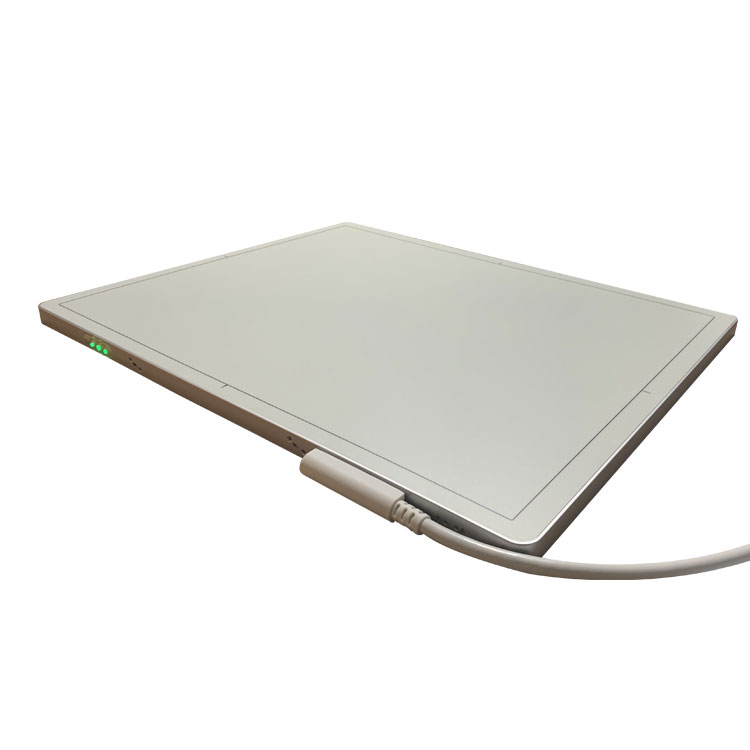
You do not need a service contract to notice an aging detector. Four symptoms, checked in this order, catch most genuine wear-out before it turns into clinical risk:
If the panel passes all four checks, your “aging” problem is probably elsewhere: cables, batteries, connectors and power supplies are consumables, and replacing them routinely is a rounding error compared to a panel decision. Diagnose the cheap parts first.
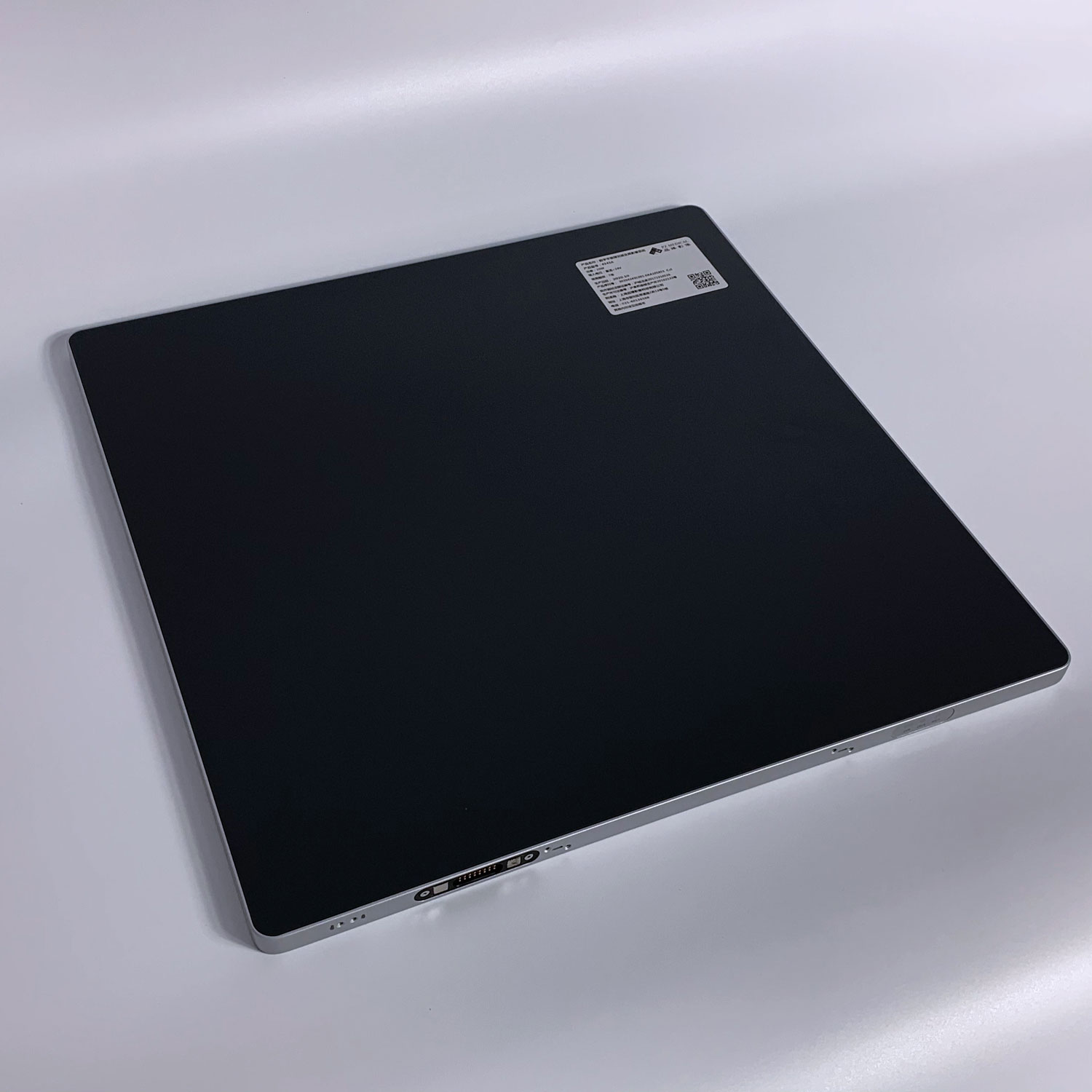
Service organizations across industries converge on the same simple arithmetic, and the 2026 DR-detector review states it plainly: when the quoted repair cost reaches roughly 40–50% of the replacement cost, replacement is usually the better decision — even when the repair is technically possible. Three reasons push against heroic repairs on detectors specifically:
Where does refurbishment legitimately fit? As a planned, priced option for budget-constrained facilities buying second-generation equipment — not as an emergency response to a failure. If a refurbisher offers you a panel, ask the same questions you would ask a manufacturer: what was replaced, what was recalibrated, what warranty attaches, and will they supply the baseline QC images the panel was measured against.
We deliberately publish no repair or replacement prices in this article — prices move, and configuration matters. The ratio rule works with whatever two current quotes you put into it.
Most of what determines a detector’s usable lifespan is decided at purchase, and almost none of it appears as a headline spec. Before you sign, put these to the supplier in writing:
A supplier who answers these six with numbers and documents has thought past the sale. That answer, more than any spec-sheet DQE comparison, predicts which panel is still working in your room eight years from now.
Published figures range from 3–5 years (manufacturer warranty-style numbers) to 7–10 years (industry reviews of modern panels in mixed clinical use), with continuous 24/7 duty quoted as short as ~2 years. The honest answer is workload-dependent: accumulated dose, handling and environment age the panel, not the calendar.
Apply the ratio rule: if the repair quote approaches 40–50% of a current replacement quote, replacement usually wins — a repaired panel returns without a reliability track record, and refurbishment downtime has its own hidden cost. Below that threshold, and for consumables (cables, batteries, power supplies), repair is routinely sensible.
In order of cheapness: growing dead-pixel counts on the defect map, calibration that fails or won’t hold, rising baseline noise or new banding versus your commissioning baseline, and image lag/ghosting that protocols cannot clear. Check cables, batteries and connectors first — they cause many “detector problems” and cost almost nothing to fix.
The imaging chain ages identically — dose is dose. Wireless panels add battery aging and charge-cycle wear, which is a consumable cost, not a panel-lifespan cost. Our wired-versus-wireless guide covers that trade-off in workflow terms.
Yes, by accumulated radiation dose — public technical discussions commonly reference an absorption ceiling on the order of 10,000 Gy for the scintillator layer. Clinical rooms approach that ceiling slowly; industrial and continuous-duty applications reach it much sooner. It is one reason identical panels show very different service lives in different environments.
If you are weighing a repair-or-replace decision, or specifying detectors with a real service-life requirement, send us your workload profile (studies per day, environment, handling setup). We will reply with our warranty terms, supported service-life guidance for that workload, and the QC documentation we ship with every panel — in plain language, for your file.
Email: admin@newheek.cn | WhatsApp / Phone: +86 19062611512
Author:Newheek-Detector
Tel:+86 19062611512
Email:admin@newheek.cn
Company:Weifang Newheek Electronic Tech Co., Ltd.