Home›Blog ›A Field-Tested Decision Framework,Wired or Wireless Detector for a Veterinary Clinic?
A Field-Tested Decision Framework,Wired or Wireless Detector for a Veterinary Clinic?
In a veterinary clinic the wired-versus-wireless decision is not about image quality — both transmit the same pictures. It is about where your detector physically travels during a working day. If the panel lives in a table slot or wall bucket and patients come to it, a wired detector’s reliability and lower cost are hard to beat. If the panel has to follow the patient — around a horse’s standing leg, into a kennel room, onto a vehicle for farm calls — wireless stops being a luxury and becomes the practical answer. Veterinary rooms add two failure modes human clinics never think about: cables that get chewed, stepped on or soaked, and batteries that die mid-afternoon during a full schedule. This article turns the choice into four questions, then into a test list you can run before you buy.
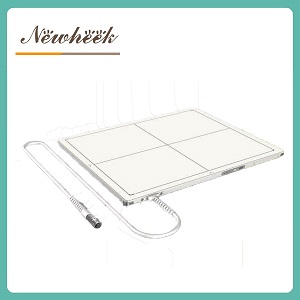
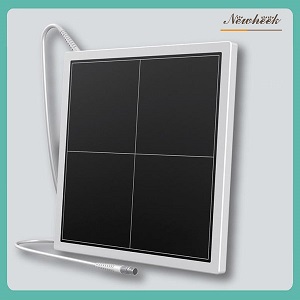
The wired configuration, tether and all. That cable is the decision in miniature: in a fixed-room workflow it is a reliability feature; in a busy veterinary room with animals, restrainers and stainless-steel tables, it becomes a thing that gets bitten, trodden on and soaked.
1. Where Wireless Genuinely Wins in a Veterinary Setting
Four situations keep coming up in veterinary workflows, and each one is a concrete argument for cutting the cable:
Standing large animals. Imaging a horse’s distal limb or an ox’s standing torso means positioning the receptor against the outside of the animal — often at awkward heights, from the far side, while the animal shifts its weight. A tether dictates where the operator can stand and how far the panel can go; a wireless panel follows the exam instead.
Patients that cannot come to the table. A painful dog in a kennel, a reptile in its enclosure, livestock in a barn: when the detector has to travel to the patient, a cable crossing the room is one more thing between you and a diagnostic image. For true ambulatory and farm-call work, wireless is close to mandatory.
Multi-room clinics. Plenty of veterinary practices run one detector across two or three rooms — radiography in the morning, dental or kennel-side work in the afternoon. Carrying one untethered panel between rooms beats unclipping, rerouting and re-straining patients around a cable run.
Restraint traffic. A vet, a holder, sometimes an owner, plus a moving animal: the room is crowded. Fewer cables across the floor means fewer stumbles and fewer yanked connections mid-exposure.
This is consistent with where the category is heading: industry market reports published in 2026 describe wireless links as the direction of travel for veterinary detectors, particularly for portable and equine work. Direction of travel — not a verdict on every room, which is exactly why the wired side deserves a fair hearing.
2. Where a Wired Detector Is Still the Right Answer
The wired option wins on four counts that matter more in practice than on a brochure:
It is always ready. No battery to charge, no charge level to track, no mid-afternoon shutdown during a full spay-and-vaccination day. For a clinic with predictable, table-based workflows, “plug in and it works” is a genuine feature.
Troubleshooting is trivial. When a wired panel stops talking to the workstation, you check one cable. A wireless dropout can be the link, the pairing, the access point, interference or battery — and it always seems to happen with an anxious animal already positioned.
Budget headroom. Market analyses of the veterinary imaging sector consistently describe a two-tier buyer landscape: corporate chains absorbing premium hardware, and cost-sensitive independent clinics watching every purchase. Across that second tier, the price difference between wired and wireless variants of the same sensor is money that can go into training, shielding or a second cassette-size panel instead.
Fixed furniture workflows. If your detector lives most of its life in a bucky slot or under a table grid, the cable is short, static and out of the danger zone — the main veterinary objections to cables simply do not apply.
3. The Two Failure Modes Veterinary Rooms Add
Here is where the veterinary decision genuinely differs from the general-purpose advice you will find elsewhere. Animal clinics stress both configurations in ways human rooms do not:
Cables under animal attack. Rodents and exotics chew; horses and cattle step; every patient drips something. A tethered cable in a vet clinic faces bite damage, crush damage and fluid exposure at floor level, every day. If you go wired, cable routing — off the floor, away from teeth, out of splash zones — becomes part of your standard operating procedure, and spare-cable availability becomes an RFQ line item.
Batteries under full schedules. A wireless detector’s battery is sized for human-hospital shift patterns; a veterinary day can be denser and less predictable. If you go wireless, ask for the rated exposures-per-charge and test it against your own daily volume — we have a separate walkthrough on wireless detector battery life and what to check. A charging discipline (who plugs it in, when, where) has to exist on day one.
Neither risk is a dealbreaker; both are management items. The mistake is buying one configuration and importing the other’s assumptions.
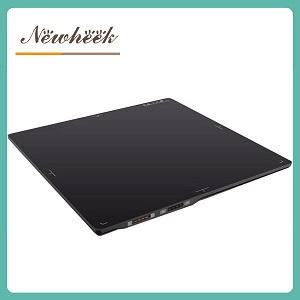
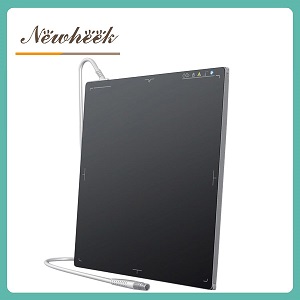
The wireless configuration: no tether to route, chew or trip over — in exchange for a battery that must survive your actual caseload and a link that must hold in a room full of stainless steel.
4. The Four-Question Framework
Answer these in order; the first “no” usually settles it:
Does the detector travel to the patient, or the patient to the detector? Table-and-bucky workflow favors wired; kennel-side, enclosure-side, standing-animal or farm-call work favors wireless.
How many exposures does a normal day hold? A handful of table films daily sits comfortably on wired; a dense rolling schedule with frequent repositioning is where wireless repositioning speed pays off — and where battery discipline must be real.
What walks through your door? Companion-animal table work suits either; exotic, equine or farm patients push you wireless for the simple reason that the panel must reach places a cable cannot.
What is the growth plan? If a second room, a mobile service or large-animal work is on the two-year horizon, buying wireless once beats re-buying. If the room is finished and the caseload is stable, wired’s savings are permanent.
A common landing point: clinics that image both companion animals and large or mobile patients often end up with one of each — a wired panel resident in the table, a wireless one that roams. If that is your trajectory, it is worth raising at quotation stage so the two units share software and workflow rather than fighting each other.
5. Test It Like a Vet Clinic, Not a Hospital
Whatever the specification sheet says, run these at the demo with your own room furniture and (ideally) your own patients:
For a wired unit: route the cable the way it will actually run in your room — around the table, past the kennel door — then check reach, trip exposure and whether the connector survives a firm tug. Ask what a replacement cable costs and how fast it ships.
For a wireless unit: start at a realistic charge level, not freshly topped up. Take it to the most metal-dense corner of your clinic — beside the stainless table, in the kennel run — and confirm the link holds. Practice the re-pairing procedure until a non-technical staff member can do it.
For both: check housing seams and connector covers against hair and fluids, confirm cleaning compatibility with your disinfectants, and put the impact and load ratings of the housing in writing — veterinary floors are harder than hospital floors.
Whichever configuration you choose, the housing, seams and connector covers face the same daily reality: hair, fluids, disinfectant and the occasional hoof. Verify them against your cleaning routine, not the catalog’s.
For the wider buying picture — sizes, resolution figures and how they map onto patients — our veterinary detector buying guide and our wired-or-wireless overview cover the groundwork, and the vet X-ray DR category collects the detector options in one place. Battery care for the wireless route has its own guide, including charging practice and what actually drains a panel detector battery.
Frequently Asked Questions
Is image quality different between wired and wireless detectors?
No — the sensor, scintillator and readout electronics are typically the same across both configurations of the same model family; only the data link differs. Resolution figures, pixel matrix and bit depth should be compared on their own merits. If a vendor implies the wireless unit images better or worse than its wired twin, ask for both specification sheets and check.
How real is the risk of losing or dropping a wireless detector?
Real but manageable. A tether physically anchors a wired panel; a wireless one depends on handling discipline — a storage slot it always returns to, protective casing, and staff habits. Clinics that treat the wireless panel like an untethered phone (left on tables, carried by one corner) do lose them. If your team will not sustain that discipline, that itself is an argument for wired.
How long does a wireless detector battery last in a veterinary day?
It depends on standby versus active use: radio idle time drains slowly, continuous imaging drains faster. Manufacturer ratings give exposures per charge under stated conditions — the number that matters is your clinic’s daily exposure count versus that rating, measured on your schedule. Build the answer into your RFQ, and confirm whether the battery is user-replaceable and what a spare costs.
We are a small clinic on a tight budget. Are we stuck with wired?
Not stuck — possibly well served. If your workflow is table-based and single-room, a wired detector delivers the same images, never runs out of power and leaves budget for training, shielding or a second panel later. The case for wireless strengthens the moment patients stop coming to the detector: large animals, kennel-side work or a planned mobile service. Buy for the workflow you actually run, with one eye on the one you plan to.
Tell Us Your Workflow — We Will Help You Choose
If you describe your rooms, your patient mix and your daily volume, we can help you land on the right configuration — including hybrid setups. Start from our veterinary portable detector page, browse the vet X-ray DR category, and reach us at admin@newheek.cn or +86 19062611512 (also WhatsApp) via our contact page.