Quick answer: a flat panel detector is usually sold as a component that goes inside a larger X-ray system, so the regulatory approval almost never carries the detector’s own model name — it covers the system the detector is built into. That is why “send me your certificate” is the wrong request, and “show me the documents that prove this detector is covered” is the right one. The five documents below — the Declaration of Conformity, the Notified Body certificate, the FDA 510(k) clearance, the IEC test reports, and the shipping paperwork matched against the label on the back of the panel — are how a buyer verifies coverage instead of taking it on faith.

This article is written for the purchasing moment: you have a quotation in hand, the supplier’s website says “CE” and “FDA” somewhere in the footer, and you need to know what to actually ask for before the money moves. No dose numbers, no laboratory math — just the paperwork chain, what each document should contain, and where each one can be independently checked.
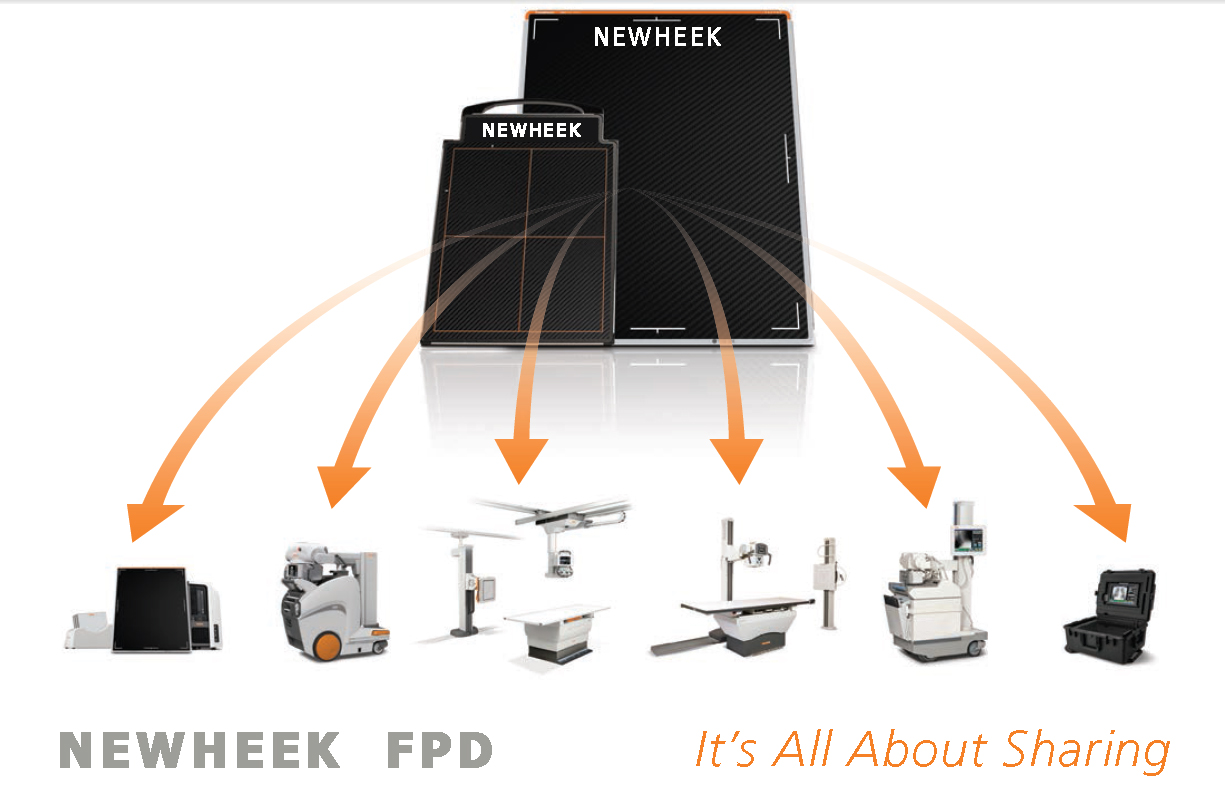
Most buyers picture certification backwards. They imagine a certificate that describes the detector: a page with the panel’s model on it, an official stamp, done. In reality, a flat panel detector is usually a component: it gets integrated into a radiography room, a mobile unit, a veterinary table, or a retrofit system, and the regulatory approval attaches to that finished system. One panel design can legitimately end up inside several very different machines, covered by several different approvals — none of which may print the detector’s model number anywhere.
This single fact explains most certification confusion in detector purchasing:
So the verification task is not “does a certificate exist.” It is “does the coverage reach the unit I am buying, in the configuration I am buying.” The five documents below are how you close that gap.
For any product placed on the EU market under the Medical Device Regulation (EU 2017/745), the manufacturer issues a Declaration of Conformity — a signed statement that the product meets the applicable regulation. When a supplier sends you one, read it as a checklist, not as a stamp:
For Class IIb devices, a Notified Body — an independent organization designated by an EU member state — examines the manufacturer’s technical documentation and quality system before issuing a certificate. This certificate, together with the DoC, is what supports the CE marking on X-ray imaging products.
Two verification steps take minutes and catch most forgeries:
A subtler point buyers miss: a manufacturer can hold a genuine ISO 13485 quality-system certificate and still have no product-level approval for the detector you are buying. ISO 13485 says the factory runs a quality management system; it is not, by itself, clearance for a specific device. Ask for both layers, and notice which one they are actually showing you.
In the United States, diagnostic X-ray systems and their major components fall under FDA’s electronic product performance standards (21 CFR 1020.30 and related sections), and X-ray imaging systems that are medical devices generally reach the market through the 510(k) pathway — a premarket notification demonstrating substantial equivalence to a legally marketed predicate device.
Here too, the component problem applies: a detector built into a complete system is typically covered by that system’s clearance, not necessarily by its own letter. So the practical questions are:
One more useful fact: FDA formally recognizes the IEC 62220 series as consensus standards for measuring digital detector performance, which is exactly why the next document matters even in the US pathway.
Certificates summarize conclusions; test reports show the work. For a flat panel detector, two families of IEC standards are worth asking about by name.
The 60601 family is the backbone of medical electrical equipment safety. In simplified terms: IEC 60601-1 is the general standard for basic safety and essential performance; IEC 60601-1-3 is the collateral standard covering radiation protection in diagnostic X-ray equipment; and IEC 60601-2-54 is the particular standard for X-ray equipment used for radiography and radioscopy (its current second edition was published in 2022, replacing the 2009 first edition and its amendments). The editions and national adoptions evolve, so what you actually ask is: “which editions and which national versions were your tests run against, and can I see the report covers?” A current supplier answers without hesitation.
IEC 62220-1 (2003) and its subparts define how a digital detector’s detective quantum efficiency — DQE — is measured: 62220-1-1 (2015) for general radiography detectors, 62220-1-2 for mammography detectors, and 62220-1-3 for dynamic imaging detectors. The subpart matters because the measurement conditions differ; a DQE figure quoted without saying which subpart, which beam quality, and which dose levels it was measured at cannot be compared with anything. A proper report states all of them.
Ask three things about any performance report: who ran it (the manufacturer’s own laboratory or an accredited third-party laboratory — both can be legitimate, but you should know which), which exact hardware and firmware version it describes, and whether the report’s model matches your quotation. For how to read performance claims once you have verified them, our walkthrough of what 3.6 lp/mm, 16-bit, and a CsI scintillator actually do in the exam room connects the specifications to daily imaging.
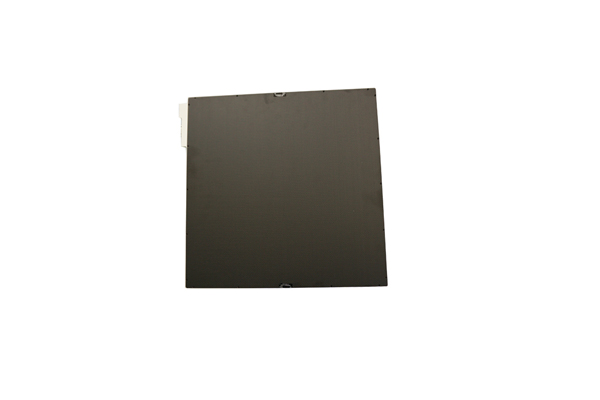
The last document set arrives with the goods, and it is where paperwork claims meet physical reality. On the day the crate is opened:

If the delivery does not match the documents — wrong serial range, missing label details, a model name that never appeared in the approval paperwork — stop, photograph everything, and resolve it before installation. Once a non-conforming unit is bolted into a room, your leverage shrinks dramatically. And if what you received is fine but arrives damaged in transit, that is a different problem with a different checklist; our article on the durability specs that decide where a detector can really work covers what the unit itself should tolerate.
Every check above gets easier when it is written into the request for quotation itself. The clause is short: “Quotations shall state the model(s) offered, the regulatory approvals covering those models in the destination market, and the document package to be delivered with the goods (DoC, certificate copies, test report covers, labeling samples). Documents will be verified before order confirmation.” Suppliers who can meet that clause will welcome it; the rest will quietly drop out of your shortlist, which is the point. The full specification-side checklist lives in our article on what belongs in a DR detector RFQ — this compliance clause slots straight into it.
One boundary worth stating plainly: this article tells you how to verify other people’s approvals. It does not — and cannot — tell you that any particular supplier holds any particular certificate, and nothing here should be read as a claim about any specific company’s regulatory status. The documents, the databases, and the checklist are yours to use on every candidate equally.
Yes, and many buyers outside the EU do, because CE documentation demonstrates that an independent process examined the product. But it does not substitute for your own market’s requirements: some countries run their own registration or import licensing, and others formally accept or reference specific approvals. Confirm your destination market’s route with your importer or regulatory consultant, and treat the CE package as one strong input — not the whole answer.
Not necessarily — product families are often certified in groups, and salespeople sometimes attach whatever document was nearest. It is, however, an unfinished answer. Ask specifically: “show me where this model appears in the approval documents, or provide the document that names it.” A capable supplier resolves this in a day. Silence or a changed subject is your answer.
Requirements differ by market: devices restricted to veterinary use generally sit outside the medical-device frameworks that govern human imaging, though electrical safety and, in some jurisdictions, other obligations still apply. The practical trap runs the other way — a human-use approval does not automatically authorize veterinary claims, and vice versa. Buy the paperwork that matches the use you will actually put the panel to, and if your room serves both, ask the supplier to explain the regulatory basis for each configuration. Our veterinary-side guide on choosing wired or wireless for a veterinary clinic covers the purchasing logic in that setting.
The manufacturer holds the originals; buyers receive copies, and that is normal. What matters is that the copies are complete (all pages, including annexes that list models) and that you can cross-check the issuing body independently in the public databases described above. A scanned copy with the annexes missing is how mismatched scopes slip through.
Approvals attach to systems, not to the panel in the crate — so verify coverage, not existence. Demand the Declaration of Conformity and read the model list; check the Notified Body number against the official database; ask for the K-number and look it up yourself; request test report covers naming the exact IEC editions and the 62220 subpart; and on delivery day, match the label on the back of the panel to every document, character by character. None of it takes longer than an afternoon, and it is the difference between owning a compliant room and owning a plausible story.
Contact: Email admin@newheek.cn · Phone/WhatsApp: +86 19062611512
Author:Newheek-Detector
Tel:+86 19062611512
Email:admin@newheek.cn
Company:Weifang Newheek Electronic Tech Co., Ltd.