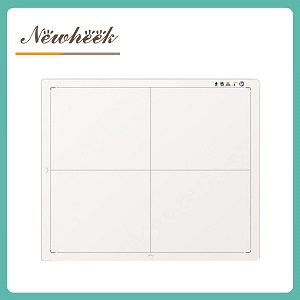
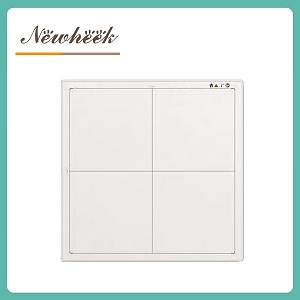
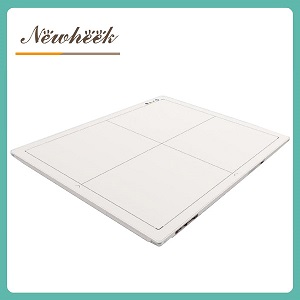
Quick answer: there is no “best” flat panel detector — only a detector that matches the room it lives in. A screening room punishes inconsistency, an emergency bay punishes fragility, an ICU punishes weight and seams, an operating room punishes anything that cannot be draped, a field unit punishes everything, and a veterinary table punishes all of the above plus the animal. Match the failure mode, not the spec sheet.Email admin@newheek.cn ,WhatsApp or call +86 19062611512,
Most detector enquiries we get start the same way: “Which one is your best?” It is an honest question, and it is also the wrong first question. The better one is “How does your room actually use a detector?” Because the same 14×17 panel that glides through a quiet screening schedule will have a very different life in a trauma bay, and the features that make it excellent in one place are often irrelevant — or actively wrong — in the other.
This article walks through six settings, one at a time, and names the one or two things each of them really tests. If you read only the section that matches your room, you will still come out ahead of a buyer who compared ten specification sheets.
A flat panel detector is a fairly simple promise: X-rays go in, a digital image comes out. Everything else — the housing, the cable or the battery, the weight, the surface, the startup routine — exists to survive a particular working environment. That is why two detectors with nearly identical image specifications can behave completely differently over a year of real use.
The specification sheet answers “what can this detector do?” The room answers “what will this detector be asked to endure?” Good buying decisions start with the second question, because the first one is almost always answered the same way: well enough.
We build detectors for several of these rooms at once — you can see the range grouped by setting on our detector applications page — and the differences between those product lines are not marketing. They are the six pressure points below, engineered in.
A busy general radiography room does hundreds of near-identical studies. Nothing dramatic happens to the detector: nobody drops it, nothing spills on it. What this room tests is consistency and rhythm. Image quality has to be the same at the start of the shift and the end of it, patient after patient, because the radiologist is comparing today’s image with last month’s.
The second thing it tests is workflow friction. In a wired room, a detector that needs attention — pairing, charging, repositioning — adds seconds to every patient, and seconds multiplied by a hundred patients is a real cost. This is the one setting where many buyers deliberately choose a wired detector: nothing to charge, nothing to pair, nothing to forget overnight. Convenience gets all the attention, but routine is where wired panels quietly win.
Emergency work inverts everything. Volume is unpredictable, patients arrive unannounced, and the detector gets moved fast, set down hard, and shared between people who did not unpack it.
What this room really tests is durability and readiness: a housing that survives a knock against a trolley rail, a surface that shrugs off disinfectant, and — if wireless — a battery and connection routine that works at 3 a.m. without a manual. Startup speed belongs here too. A detector that takes a long time to wake up is a detector that gets used less in emergency work, and a detector that gets used less is a poor investment no matter how good its images are.
This is also the room where buyers most often over-index on image quality. The images from a modern panel will be fine. Whether the panel is still fine in year three after a thousand trolley-side landings is the actual question.
Bedside imaging asks a strangely specific combination: the detector must be light enough to position over or under a patient who cannot help, small enough in profile to slide where there is little clearance, and easy to wipe down between patients. It also has to get the image off the device and to the reading workstation without anyone walking back and forth through a ward with a laptop.
Weight deserves more attention than it usually gets. The person holding the panel above a patient is often a nurse, not a radiographer, and the difference between a heavy panel and a light one is felt arm by arm, shift by shift. Seams and crevices matter here too — infection control teams notice them before radiologists do.
Here is a blunt boundary that saves some buyers real money: a static flat panel detector does not do fluoroscopy. If the procedure needs a live, moving image — guiding instrumentation in real time — that is a job for a dynamic detector or a dedicated fluoroscopy system, not for a static DR panel, however good it is.
What a static panel does well in surgical settings is confirmation: checking position after a reduction, verifying hardware placement, documenting the result. And what the room itself demands is mostly physical — a panel that can be covered and cleaned to the standard the theatre requires, handled by gloved staff, positioned around other equipment. If your case list is mostly live guidance, be honest about it early; the product families do not substitute for each other. Our dynamic line exists for exactly this reason — see, for example, the a-Si dynamic detector family — but it is a different tool, not an upgrade of the same one.
Take the detector out of the building and the list of enemies changes completely: vibration, temperature swings, dust, and handling by whoever happens to be nearest. A panel that lives in a vehicle or travels between sites is tested by everything mechanical — the case, the latches, the connectors, the way the cable seats, whether the thing still pairs after a morning on a corrugated road.
The buyers who are happiest with field kits are the ones who treated transport as part of the specification: a real case, a real place for every cable, and a habit of checking all of it before departure, not after arrival. The detector itself is rarely the first thing to fail out there. Its accessories are.
Veterinary work combines several of the pressures above and adds its own. Patients cannot be instructed to hold still, which raises the premium on every second between positioning and exposure. Patients vary from a kitten to a mastiff, which means restraint, unpredictable loads on the panel, and the occasional claw across the housing. Fluids appear where fluids were not planned.
For small clinics, a single versatile panel — something like our a-Si veterinary detector — usually makes more sense than a cabinet full of specialized sizes, precisely because the room’s real constraint is budget and bench space, not image subtlety. What matters is that the panel tolerates the environment: wipeable, sturdy, quick, and forgiving of being set down next to a very unimpressed animal.

Put the six settings side by side and the pattern is obvious. The same seven characteristics, ranked completely differently depending on where the detector will live:
| Characteristic | Screening room | Emergency | ICU / bedside | Operating room | Field / mobile | Veterinary |
|---|---|---|---|---|---|---|
| Image consistency | Critical | High | High | High | Medium | Medium |
| Housing durability | Medium | Critical | Medium | Medium | Critical | Critical |
| Weight and handling | Low | Medium | Critical | Medium | High | High |
| Wireless operation | Optional | High | High | Medium | High | Medium |
| Startup and pairing routine | Medium | Critical | High | Medium | High | Medium |
| Cleaning and sealing | Medium | High | Critical | Critical | Medium | High |
| Cost pressure | Medium | Medium | Medium | Low | High | Critical |
Two honest footnotes. First, “cost pressure: critical” in veterinary work is not a slight — it is the market being rational, because the alternative to a versatile, affordable panel is often no imaging at all. Second, nothing in this table says image quality is unimportant. It says image quality is table stakes: every serious panel on the market clears that bar, so the ranking has to be done on everything else.
Once you know which rows are critical for you, the specification sheet becomes useful instead of overwhelming. A few examples of how the mapping works in practice:

One more mapping worth making explicit: physical size. A screening room standardizes on one large field and never thinks about it again; a mixed clinic or a veterinary practice may genuinely need more than one size, because a panel that is perfect for a chest study is clumsy for an extremity. We keep a separate guide for how detector sizes match different jobs, so this article will not duplicate it — the point here is only that size is a room decision, not a personal preference.
Specifications settle arguments; a day in your own room settles purchases. Before committing to any panel, run this short sequence in the environment where it will actually live:
Usually, yes — no cable means faster positioning around trolleys and no trip hazard in a crowded bay. But a well-managed wired detector in a fixed emergency room position can be the more reliable choice, because it never has a flat battery. The deciding factor is not wireless versus wired; it is whether the routine around the detector survives a busy shift.
Some do, and we build panels that are deliberately versatile. But be realistic about the compromises: a detector optimized for a fixed room spends its life on gentle handling, and field work is not gentle. If field use is a regular part of your week, prioritize the housing and the case, and accept that a panel built mainly for the bench will age faster outside.
Only if your procedures need a live image during the intervention. For post-placement confirmation and documentation, a static panel does the job. For real-time guidance — watching something move as you work on it — you need a dynamic detector or a fluoroscopy system, and no static panel is a substitute for either.
It tells you what the enclosure resists: the “X4” in IPX4, for example, means splash resistance from any direction. That is the difference between a panel that tolerates disinfectant wipes and one that must be kept away from liquids entirely. Match the rating to how your room actually cleans, not to the biggest number on the chart.
Hold the room constant, not the spec sheet. Put both panels in the same setting, run the same five-step room test above, and compare what your staff said afterward. A specification comparison tells you which detector is better on paper; a room comparison tells you which one your team will still be happy with in two years.
Tell us which of the six settings your detector will live in — and, if you are honest, which one it will sometimes be dragged into as well — and we will point you at the panel family built for that pressure, including the trade-offs we would not claim away.
Describe your room and your case mix: Email admin@newheek.cn, WhatsApp or call +86 19062611512, or leave a note on our contact page. The more specific you are about how the detector will actually be used, the shorter the conversation needs to be.
Author:Newheek-Detector
Tel:+86 19062611512
Email:admin@newheek.cn
Company:Weifang Newheek Electronic Tech Co., Ltd.