Quick answer: a flat panel detector that has reached the end of its working life is not ordinary old electronics. It contains materials that many jurisdictions treat as controlled waste, it carries device data that should be wiped before it leaves your building, and it is valuable enough that its last journey should be documented. You have three honest exits: planned refurbishment, a trade-in or take-back arrangement with the vendor, or disposal through a licensed handler who gives you paperwork. What you should not do is slide it into a corner of the storage room and forget about it — which is, by a comfortable margin, the most common ending.
Scope note: waste rules differ by country and region, and this article is not legal advice. Where disposal obligations are concerned, your local regulations and a licensed waste handler make the call — this article explains why the category exists and what to ask for, in plain language.

Here is how it usually plays out. The panel that worked every day for years finally gives up — or the room gets a newer, better one. The new detector is installed, everyone admires the first images, and the old panel goes back into the same bubble wrap it arrived in. Then it lives in a corner of the storage room, next to the retired chairs and the broken trolley, for months. Sometimes years.
Nobody means to neglect it. There is simply no obvious next step. It is too expensive to treat as trash and too broken to treat as equipment, and so it waits until someone in admin asks the uncomfortable question: “shouldn’t we do something about that?”
This article is the answer to that question, written down before you need it. Because a detector’s retirement has three parts — its materials, its data and its value — and each part has a right way to be handled.
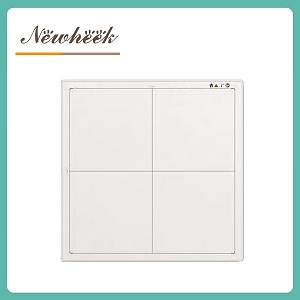
Crack the housing open (don’t — but picture it) and a detector is not just a circuit board. There is a layer of radiation shielding built into the frame. There is the scintillator and sensor assembly — engineered materials that took real industrial effort to make. Wireless panels carry a rechargeable battery pack. Depending on the jurisdiction, several of these components fall under rules that apply to controlled or hazardous waste, not to the bin that takes your office monitors.
That matters for one very practical reason: the cheapest disposal route — general electronics collection — is often the wrong one, and handing a panel to an unlicensed collector can make the previous owner the party responsible when things go wrong. In many places the rules even set strict handling windows and documentation requirements for this kind of equipment.
The plain-language summary: treat a retired detector the way you would treat an old X-ray tube, not the way you would treat an old printer. It came from a regulated industry, and it leaves through a regulated door.
Here is the part almost everyone misses. A detector is not a hard drive, but it is not blank either. Over its working life it accumulates:
None of this is a reason to panic; a panel rarely stores patient images itself — that lives on the acquisition workstation and PACS. But a device that is about to be handed to strangers, resold or dismantled should be reset to factory state first, and that reset should be written down. A one-line entry in the panel’s file — “factory reset performed on [date] by [person]” — closes the question permanently. Data security at retirement is becoming part of standard equipment audits, and the departments that kept the note are the ones who breeze through them.
A flat panel detector is one of the more valuable single components in the room, and valuable retired equipment attracts loose handling. Panels circulate in the second-hand and refurbishment trade, and not all of them travel with clean histories. If a retired unit is ever sold, traded or handed over, the document set is what separates a tidy exit from a lingering liability:
Three documents, one folder. Whether the panel is sold, traded in or scrapped, the folder is what lets you answer any future question in thirty seconds instead of three anxious weeks.
With materials, data and records in mind, a retired panel really has only three respectable destinations:
If the panel failed young, or the repair-or-replace arithmetic from our detector-lifespan guide says repair wins, refurbishment is legitimate — as a planned, documented decision, not an emergency improvisation. The same rule applies at the receiving end: a serious refurbisher will tell you what was replaced, what was recalibrated, and will supply a warranty in writing. No documents, no deal.
Many suppliers will take a retired panel back — as a trade-in credit, a recycling arrangement, or simply as a service to keep their hardware out of the wrong channels. This is the lowest-effort correct answer, but only if you ask for it before the panel is dead in a corner. Ask at purchase; the answer belongs in the buying conversation, not the funeral.
When the panel is truly finished, a licensed waste handler collects it, treats it under the local rules, and issues a disposal certificate. This route usually costs money rather than earning it — and that is fine. The certificate is the product. It is the document that proves your facility closed the loop properly, and it goes in the folder from Section 4.
End-of-life is easier when the answers arrive with the detector instead of after it. Put these four questions to a supplier during the buying conversation:
Notice a pattern: the same supplier habits that predict a detector living a long, well-documented life — written answers, real documents, thinking past the invoice — are the same ones that make its retirement clean. Choosing that kind of supplier is the single easiest decision in this whole article. When you are comparing options, our flat panel detector product line and the buying-checklist guides on this site are built around exactly that kind of question.
Second-hand and refurbishment markets exist and are legitimate, but a responsible sale includes three things: the panel’s records (ownership, service history, QC baseline), a documented factory reset of its data, and honest disclosure of its condition. A sale without paperwork invites the question “where did this come from?” — and you would rather the answer be a folder than a shrug.
That depends on your jurisdiction and on what the panel contains — shielding materials, scintillator assemblies and batteries put some components under controlled-waste rules in many regions. Treat it as a special case: ask a licensed waste handler, and let the local regulations decide rather than the office that handles old monitors.
Arrangements vary: some suppliers take panels back as part of a trade-in, some licensed handlers charge a fee, and some regions run collection schemes for regulated equipment. The consistent rule is that whoever takes the panel should also hand you a document — if nobody can produce paper, the arrangement is not finished.
Some components — cables, batteries, handles, housings — are ordinary consumables and are routinely salvaged. The sensor and scintillator assembly is not a spare-parts drawer item; it is the part that makes the panel a regulated object in the first place. Leave the disassembly to the licensed handler and keep the certificate.
If you are specifying detectors and want end-of-life answers — reset procedures, take-back terms, disposal documentation — included in the purchase conversation instead of after it, tell us your room list and workload. We will reply with our lifecycle documentation in plain language you can file alongside the warranty.
Email: admin@newheek.cn | WhatsApp / Phone: +86 19062611512
Author:Newheek-Detector
Tel:+86 19062611512
Email:admin@newheek.cn
Company:Weifang Newheek Electronic Tech Co., Ltd.