Quick answer: does one charge really carry a full list of cases
A wireless detector that starts the morning at full charge and a wireless detector that started at three bars are not the same piece of equipment, even though the imaging chain is identical. The published figure is measured under controlled conditions. A working shift adds cold rooms, repeated wake-ups, large images sent across a busy network and cases that take longer than planned. The useful question is not the number on the sheet but how many examinations a fully charged panel completes in the room where it will actually be used. Ask for that figure under the technique settings of the clinic, then confirm it during a trial before the purchase order goes out.
Why the hours on the specification sheet rarely match the case list
A battery figure is usually written as hours of standby or studies per charge. Neither predicts the other in a real room. Standby assumes the panel rests between exposures. Most detectors do something different: they wake for positioning, stay awake while a radiograph is repeated, hold a preview image on screen, and transmit a full-size image over wireless each time. A quiet morning and a morning with six large patients can consume very different amounts of the same charge.
Two external reference points give the buyer a scale, neither of them a promise about a specific panel. Independent buying guides put general wireless detector standby in the region of eight to twelve hours, and replacement cycles of roughly three to five years depending on charge habits and environment. A government radiography tender published in 2026 asked for at least sixteen hours of standby as a minimum requirement. Those numbers come from different sources and describe different test conditions, so they belong in a comparison, not in a conclusion. The number worth acting on is the one measured with the generator, the network and the case mix that will be used daily.
What takes power out of a detector during a shift
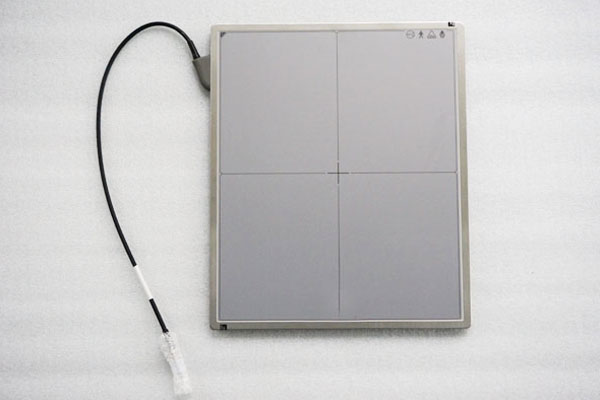
Some of the drain is obvious. Each exposure wakes the sensor and the radio. Each image sent to the workstation costs energy, and a weak wireless signal makes the transmission longer. A detector used for a large-breed abdomen or a bariatric patient stays active through several positioning attempts, while a panel that spends the afternoon in a cool corridor loses capacity to the temperature before a single exposure is made.
Less obvious is the time between cases. A panel left awake on a trolley after a morning list is not standing by in the economic sense; it is drawing power while nobody is tracking it. Rooms that hand a detector from one technician to another often discover this at the end of the day, when the last view fails and nobody can say when the charge was last checked. A short end-of-shift routine — return to the dock, record the state, note anything unusual — prevents most of these surprises and takes less time than repeating a view.
How many spare batteries or spare panels a room actually needs
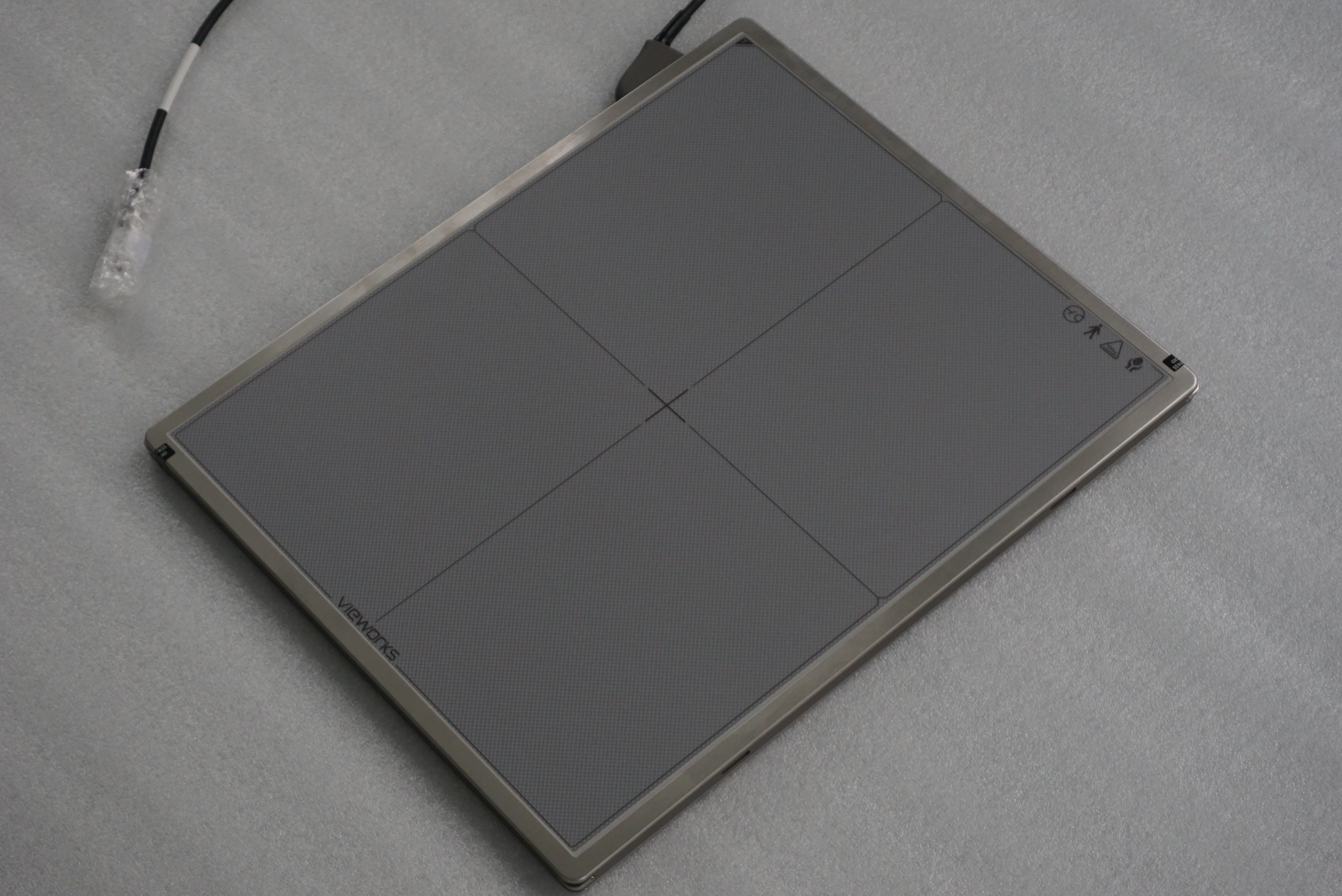
There are two ways to keep a schedule moving. One is a spare battery kept charged and ready; the other is a second detector that stays in service while the first returns to the charger. The right answer depends on the room, not on the specification. A low-volume practice with one panel and a break between lists can manage with careful charging. A mobile unit that travels between sites, or a clinic where a detector is shared across rooms, reaches the limit faster because there is no convenient pause in which to recharge.
Before deciding, measure the real studies-per-charge figure over several ordinary days and note when the low-charge warning appears. If the warning arrives before the end of a normal list, the choice becomes a purchasing decision: a spare pack, a second panel, or a design that charges in the tray between cases. An existing comparison of wired and wireless flat panel detectors explains where the charging-in-tray arrangement works and where it does not. The wireless detector range and the wireless veterinary configuration show the physical layouts that make a charging routine either easy or awkward.
Connection quality is part of this calculation. A panel that retransmits images over a weak link consumes more time and power than one with a clean signal, so the network survey belongs in the battery conversation. The wireless detector network requirements cover the coverage and routing checks worth making before the count of spare batteries is fixed.
What changes as a battery ages
Aging rarely announces itself with a failure. It appears as a shorter useful window: the panel still reaches full charge, yet the warning comes earlier in the list than it did a year ago. Charging takes longer, or the level falls faster during a period when the detector is doing nothing. Capacities quoted in a datasheet describe a new pack, so behaviour observed in service is the only honest indicator for a unit already in use.
Keep a short note of the date, the observed studies per charge and any change in charging time. A pattern is more useful than a single bad day, and the record becomes evidence when a replacement is discussed. A panel stored for long periods needs its own note; the storage and first-exposure guide deals with that separate situation. Any sign of physical damage, swelling or unusual heat ends the discussion immediately — stop using the unit and follow the manufacturer’s instruction rather than testing it through a list.
How charging habits change the service life
Three habits are consistently associated with a longer battery life in the published guidance: avoiding repeated deep discharge, avoiding long storage at full charge in a warm place, and following the state-of-charge interval stated in the manual. None of these requires special equipment. They require a rule that is written down and applied by everyone who handles the panel, including the person who takes it home in a vehicle at the end of an emergency call.
Temperature joins the same rule. A detector left in a vehicle overnight or moved from a cold corridor into a warm room behaves differently from one that stayed in a conditioned room; the imaging assembly needs time to settle as well as the battery. The durability specification guide covers the environmental ratings that matter in those rooms, and the infection control guide covers what happens when cleaning and charging share the same bench.
What the purchase documents should say about the battery
A battery is a wear item, and a purchase order that treats it as permanent equipment leaves the buyer with an unpriced decision a few years later. One page of questions resolves most of it: whether the pack is user-replaceable or requires service, what the expected replacement interval is under the intended workload, what a replacement costs, and whether the price is fixed for a stated period. Ask how long spare packs and charging docks will remain available, and ask for the state-of-charge interval the manufacturer recommends for storage.
The answer belongs in writing, and the same questions should go to every supplier being compared. A supplier who answers with a single standby figure has answered only the easiest part. Format choice is a separate decision with its own consequences for the charging routine; the 14×17 versus 17×17 comparison sets out the room-level trade-offs. Further configuration questions reach the contact page.
When a wired panel removes the battery question
For a fixed room with a predictable list, a tethered detector removes an entire category of decisions. There is no spare pack to budget, no state-of-charge rule to enforce and no end-of-day habit to audit. The cost is a cable that limits where the panel can go and how quickly the room changes between positions. The decision is therefore about the shape of the work: a room with a fixed detector position benefits from a wired panel, while a detector that leaves the room for bedside, mobile or field work needs a battery and the routine that comes with it.
FAQ
How long does a wireless flat panel detector battery last?
Independent buying guides place the replacement cycle at roughly three to five years, with charge habits and operating temperature making a substantial difference. Published standby figures of eight to twelve hours describe general wireless detectors under the conditions used for the estimate; they are not a fixed figure for a particular room. Measure studies per charge with the actual case mix, and ask the supplier to state the expected replacement interval in writing.
Can a detector be used while it is charging?
That depends on the docking design and the manufacturer’s instructions. Some detectors charge while resting in the bucky tray and are removed for use; others require the charging session to finish first. The permitted sequence, the connector care and any restriction on use during charging should be confirmed in the manual and in the purchase documents instead of assumed from the shape of the dock.
How many spare batteries or panels are needed for a full shift?
Derive the number from measured studies per charge rather than from a catalogue figure. Record when the low-charge warning appears during two or three normal lists, then compare that point with the end of the longest realistic list. If the gap is small, a charged spare pack or a second detector keeps the schedule moving; if the gap is large, changing the charging location may be enough. Shared and mobile detectors usually need a larger margin than single-room panels.
What signs show a detector battery is nearing the end of its service life?
The common signs are an earlier low-charge warning than in previous months, longer charging sessions, and a charge level that falls faster than the workload explains. A single unusual day is not evidence; a repeated pattern is. Physical swelling, unexpected heat, odour or damage to the enclosure calls for immediate removal from service and the manufacturer’s handling instruction, not further testing on patients.
What should be confirmed in writing before buying a wireless detector?
Request the measured studies per charge under the intended technique, the recommended state-of-charge interval for storage, whether the pack is user-replaceable, the replacement cost and interval, and the availability period for spare packs and docks. Ask for the same information from every supplier being compared so the answers can be placed side by side. A standby figure on its own does not answer these questions.
Detector configuration, battery terms and RFQ questions: admin@newheek.cn | WhatsApp: +86 19062611512