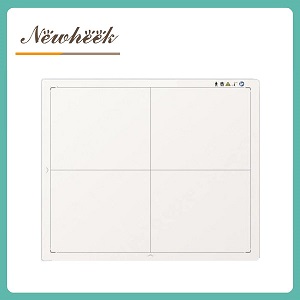
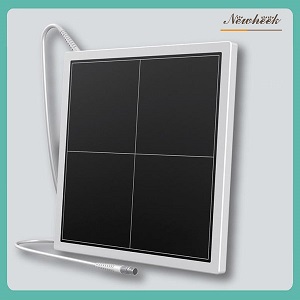
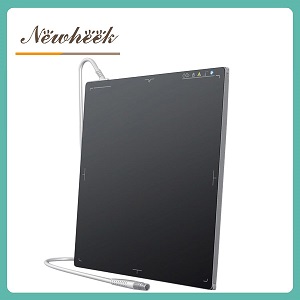
If you run a small animal clinic, a mobile vet practice, or a startup imaging center, you already know the problem: digital radiography is no longer optional, but the price tags on premium systems are built for referral hospitals, not for you.
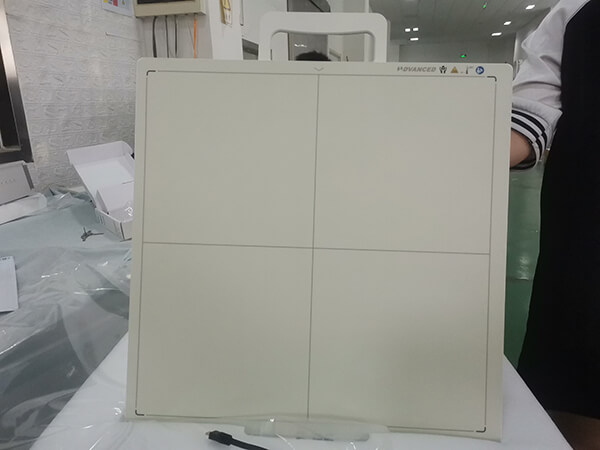
This guide is written for clinic owners, veterinarians, and practice managers who need a cost-effective veterinary X-ray flat panel detector that actually works in a small clinic — without the six-figure invoice, the dedicated IT team, or the room-sized installation.
Why Small Clinics Are Switching to Flat Panel Detectors
Computed radiography (CR) served small clinics for years, but the trade-offs have become hard to justify:
| | CR Systems | Flat Panel Detector (DR) |
| — | — | — |
| Time to image | 60–120 seconds | 3–6 seconds |
| Workflow | Cassette handling, plate reader | Wireless, direct to software |
| Consumables | Phosphor plates wear out | None |
| Space needed | Reader + storage | A charging dock |
| Dose efficiency | Lower DQE | Higher DQE at lower dose |
| Upfront cost | Lower | Now comparable for small formats |
For a clinic seeing 10–25 radiographic cases a week, the deciding factor is rarely image quality alone — it’s throughput and sedation time. A detector that produces a diagnostic image in seconds means fewer repeat exposures, shorter anesthesia windows, and more patients per day.
Affordability isn’t just the purchase price. Compare these four cost lines before you buy:
1. Acquisition cost
Small-format detectors (typically 14″ × 17″ or 10″ × 12″ active area) are the entry point. Prices vary widely by brand, scintillator type, and whether you buy OEM or branded — request quotes rather than relying on list prices.
2. Integration cost
The hidden budget killer. Ask specifically:
Does it work with my existing X-ray generator?
Is the acquisition software included, or licensed separately?
Does it integrate with my PACS / DICOM viewer / practice management system?
Are there per-seat or per-year software fees?
3. Lifetime and support cost
Battery replacements, tethered cable wear, calibration, and warranty extensions. A cheap detector with a two-year lifespan is more expensive than a mid-priced one lasting eight.
4. Downtime cost
If the detector fails, can you still radiograph? Clinics that keep a CR cassette as backup lose far less revenue during service windows.
Technical Specifications That Matter for Small Animal Practice
You don’t need the spec sheet of a human radiology department. You need these:
Detector technology
CsI (cesium iodide) — higher sensitivity, better low-dose performance, higher price. Preferred if you image a lot of cats, exotics, or pediatric-sized patients.
GOS (gadolinium oxysulfide) — lower cost, still diagnostic for most small animal work. A reasonable choice for high-volume orthopedic and thoracic imaging.
Pixel pitch
100–140 µm is the practical range. Smaller pitch gives finer detail for small anatomy (dental, extremities, avian) but increases file size and cost.
Active area
14″ × 17″ — covers most canine thorax, abdomen, and full-limb studies. The safe default.
10″ × 12″ — lighter and cheaper, good for extremities, dental, and exotics, but you’ll need to stitch or reposition for large dogs.
Wireless vs. tethered
Wireless is the standard for small clinics: no cable to trip over, easier positioning, faster workflow. Confirm battery life (aim for 8+ hours of intermittent use) and whether spare batteries are available.
Ingress protection
Look for IPX7 or better if you image in a wet prep area or do field/mobile work.
Dose and DQE
Ask for the DQE curve, not just the peak number. A detector with strong DQE at low dose lets you reduce exposure — better for patient safety and for your generator’s longevity.
DICOM 3.0 compliance
Non-negotiable. Without it, you’re locked into proprietary software forever.
If you show interest in our products, please contact us for a full quotation and technical specification sheet.
Email :newheekcn@163.com
Tel:+86 19015366638 ;
Whatsapp:+86 19015366638
Author:Newheek-Detector
Tel:+86 19015366638
Email:newheekcn@163.com
Company:Weifang Newheek Electronic Tech Co., Ltd.