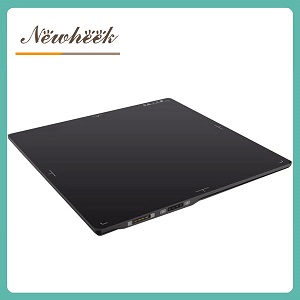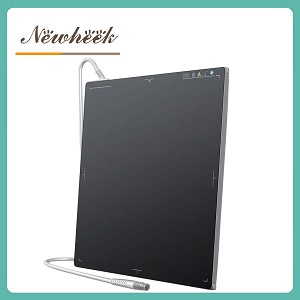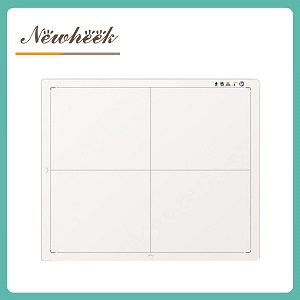
Radiography-DR flat panel detector is a kind of precision and precious equipment, which plays a decisive role in the imaging quality. Familiarity with its various performance indicators will help us improve imaging quality and reduce X-ray radiation dose.
Because it is faster than film imaging, and it is digital imaging, basically you can check the filming effect directly on the computer. Our flat panel detectors have various styles, and different styles have different image output times, ranging from 2.5 seconds to 5 seconds.
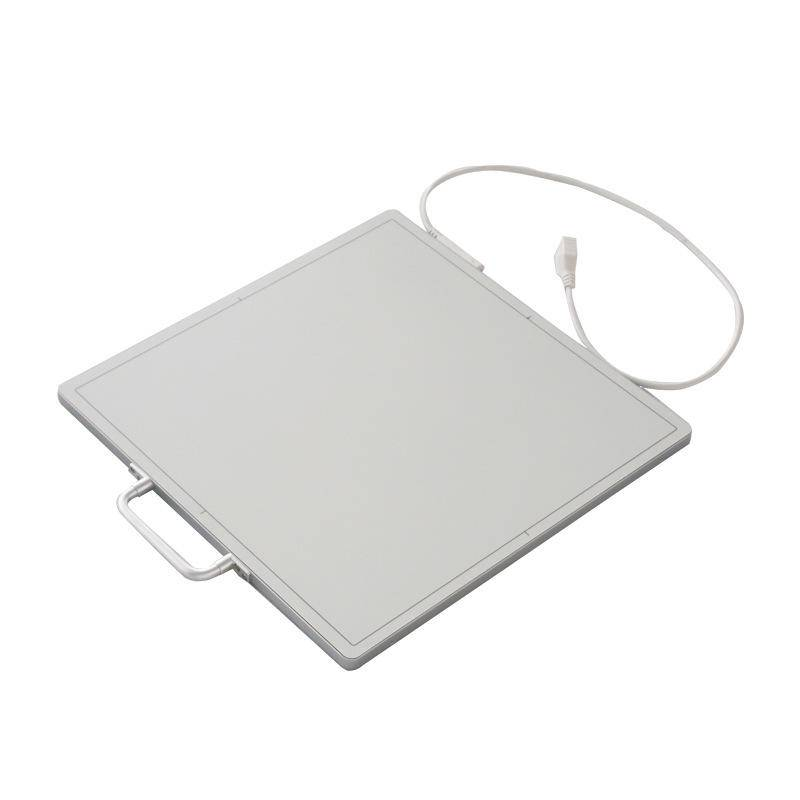
Wired or wireless: what actually changes
Our flat panel detectors come in two data paths. The wireless board streams over 2.4G or 5G links compliant with IEEE802.11 a/b/g/n/ac, so it can be carried to a bedside or a table without a cable run. The wired board gets power and data from one cable and does not depend on the radio environment.
Relatively speaking, the wireless board is more convenient and customers report a better sense of use. The biggest advantage of the wired flat panel detector is its cost performance – if the budget is limited and you still want digital imaging, the wired board is the honest choice.
The mistake we see most often is buying wireless for a fixed room to future-proof it, then discovering the battery has to be managed daily by whoever opens the room.
| Spec | NK1417V (wired) | NK1717V (wireless) | NK3543S (wired) |
|---|---|---|---|
| Detector type | Amorphous silicon | Amorphous silicon | Amorphous silicon |
| Scintillator | Caesium iodide | Caesium iodide | Caesium iodide |
| AD conversion | 16 bit | 16 bit | 16 bit |
| Image generation | 2.5 s | 2.5 s | 2.5 s |
| X-ray energy range | 40-150 kV | 40-150 kV | 40-150 kV |
| Data interface | Wired | 2.4G / 5G, IEEE802.11 a/b/g/n/ac | Wired |
| Working environment | 5-35 C, 10-75% RH | 5-35 C, 10-75% RH | 5-35 C, 10-75% RH |
| Storage environment | -20~55 C, 10-75% RH | -20~55 C, 10-75% RH | -20~55 C, 10-75% RH |
| Power | 20 W | 20 W | 20 W |
| Supply voltage | 100-240 V, 50-60 Hz AC | 100-240 V, 50-60 Hz AC | 100-240 V, 50-60 Hz AC |
Two sizes cover most rooms
We usually supply 14×17 and 17×17. The smaller active area covers extremities, paediatric work and most veterinary table work. The 17×17 covers chest and abdomen without repositioning the cassette, which matters when patients cannot move easily.
Both sizes are available in wired and wireless versions with the same detector type and readout, so the choice between them is about coverage, not about image quality.
What decides the image output time
Different styles have different image output times, ranging from 2.5 seconds to 5 seconds. That single number decides how many patients a room can take in a morning, more than any resolution figure on the datasheet.
Our panels use an amorphous silicon detector with a caesium iodide scintillator and a 16 bit readout. The X-ray energy range is 40-150 kV, which covers general radiography, most veterinary work and industrial NDT up to that energy.
Environment matters more than people expect. The working range is 5-35 C at 10-75% relative humidity, and storage is -20 to 55 C. In an unheated room in winter, let the panel return to working temperature before exposing it, or you will see density drift.
There are two cases where we tell customers not to buy from us. If you need a detector larger than 43×43 cm, our range does not cover it. If you need a dynamic imaging system running at frame rates far above what a static panel delivers, this is not that product. If the room has no way to keep a wireless panel charged and tracked, the wired board is the honest answer even though it costs us the wireless upsell.
FAQ
What is the difference between a flat panel detector and a CR cassette?
A CR cassette stores the latent image on a photostimulable plate and needs a separate reader before you see anything. A flat panel detector reads out in place, and on our panels the image is generated in 2.5 seconds, which is why DR rooms can turn patients over faster.
Does a wireless detector lose image quality compared with a wired one?
Not on the panel itself – the detector type, scintillator and 16 bit readout are the same. What changes is reliability: the wireless link depends on the 2.4G or 5G environment, and the battery has to be managed.
What X-ray energy range do these panels support?
40 to 150 kV, which covers general radiography, most veterinary work and industrial NDT up to that energy. Above 150 kV you are outside the rated range.
How should a detector be stored when the room is not in use?
Between -20 and 55 C at 10-75% relative humidity. The working range is narrower: 5 to 35 C at 10-75% RH. Let the panel return to working temperature before exposing it.
Can I retrofit a flat panel onto an existing X-ray room?
Usually yes, but the generator has to be matched. A 32 kW generator with 40-150 kV and 50-320 mA in six steps is a common pairing. If the room only has single-phase 220 V, the usable power class drops and you should confirm that before ordering.
Where this fits
We can recommend the most suitable one for you according to your needs. If you also want to buy direct DR flat panel detectors, please contact us.
our flat panel detector range · contact us
Email: admin@newheek.cn
Tel: +86 19062611512 ; Whatsapp: +86 19062611512