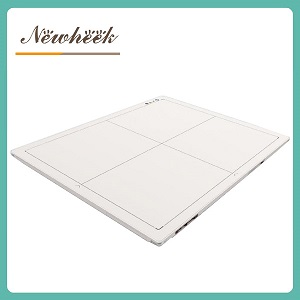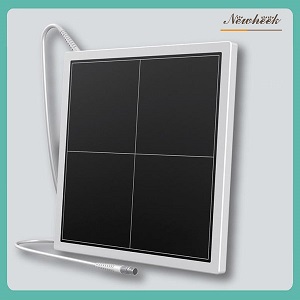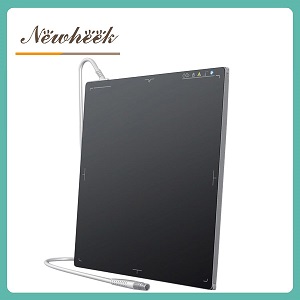

A flat panel detector (FPD) is a core digital X-ray device used in medical imaging, industrial NDT, and security inspection. It replaces traditional systems, converting X-ray photons into high-quality digital images with real-time visualization and faster workflows.
What Is an FPD?
FPDs use a TFT pixel matrix to detect X-rays, convert them to electrical signals, and send them to a computer for instant analysis. They’re valued for compact design, high sensitivity, and consistent image quality— the gold standard for digital X-ray imaging.
How Does an FPD Work?
FPDs follow 3 simple steps:
1. X-Ray Absorption: Denser materials (bone, metal) absorb more X-rays than less dense ones (soft tissue).
2. Signal Conversion: Active layer (scintillator or semiconductor) converts X-rays to electrical signals.
3. Image Readout: Signals are digitized and processed into viewable, editable images.
FPD Types: Direct vs. Indirect
1. Direct Conversion FPDs
Use amorphous selenium (a-Se) for direct X-ray-to-signal conversion. Pros: High resolution, consistent DQE, fast readout. Cons: Higher cost, fragile selenium layer. Ideal for medical imaging (mammography) and precision industrial NDT.
2. Indirect Conversion FPDs
Two-step process (X-rays → light → signals) using scintillators and amorphous silicon. Pros: Lower cost, more durable. Cons: Slight blurring. Ideal for general radiography, mobile imaging, and security screening.
Key Applications
– Medical Imaging: DR, mammography, cardiac angiography (low radiation dose, real-time imaging).
– Industrial NDT: Inspect castings, welds, and electronics for defects without damage.
– Security: Airport/luggage scanning for prohibited items.
Pros & Cons
Pros
– Better image quality, faster workflows, long-term cost savings.
– Portable, integrates with digital systems (EHRs, quality control).
Cons
– High upfront cost, maintenance needs, and obsolescence risk.
– Potential radiation dosage creep.
Author:Newheek-Detector
Tel:+86 18953679166
Email:service@newheek.com
Company:Weifang Newheek Electronic Tech Co., Ltd.